Engineering Through Observation
Ancient infrastructure was developed in response to practical challenges that remain familiar today. Communities needed dependable transportation routes, crossings over rivers and valleys, and reliable ways to collect and distribute water.
Without modern surveying equipment or heavy machinery, builders depended on geometry, physical models, accumulated experience, and close observation of local terrain. Their projects often demonstrate how effective design can emerge from relatively simple principles.
Roads and Foundations
Ancient road builders understood that a durable surface required a suitable foundation. In areas exposed to heavy traffic or frequent rainfall, roads could be constructed from several layers of stone, gravel, and compacted material.
Drainage was an important consideration. Channels and raised road surfaces helped move water away from the main route, reducing erosion and deterioration.
Routes were also planned according to geography. Following natural contours could reduce steep gradients and limit the amount of excavation required, while strategically placed crossings connected separate sections of a transportation network.
Crossing Waterways
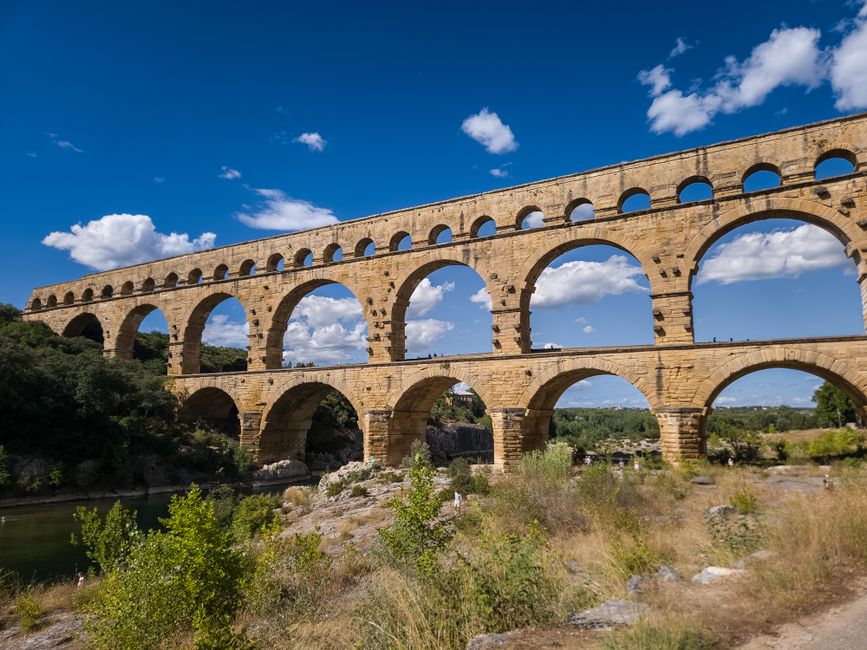
Rivers created major obstacles for ancient transportation systems. Bridge builders had to solve two problems at once: supporting the weight of the structure and resisting the forces created by moving water.
Stone masonry allowed engineers to construct substantial piers and arches. The shape of an arch distributed forces toward its supports, making it possible to span openings without relying on a single horizontal beam.
The foundations beneath the water required particular care. Their stability depended on the riverbed, current, seasonal water levels, and protection against erosion.
Water Management
Ancient settlements also developed sophisticated methods for controlling water. Reservoirs stored supplies, channels transported them, and drainage systems removed excess water from inhabited areas.
In gravity-fed systems, elevation was critical. Engineers needed to establish a continuous but controlled gradient so that water could move toward its destination without flowing too quickly.
Irrigation networks applied similar principles to agriculture. Channels divided water between fields, while gates and reservoirs could help regulate distribution according to local conditions.
Materials and Construction
Ancient engineers worked with materials that were available nearby, including stone, timber, brick, clay, and various forms of cementitious material. Their construction methods evolved through repeated experience with different environments.
The properties of materials mattered greatly. Builders had to understand which stones could support heavy loads, which materials resisted moisture, and how foundations behaved in different soils.
This practical knowledge was often passed between generations of specialized craftspeople.
Relevance Today
Modern infrastructure relies on sophisticated calculations, computer modeling, and advanced construction materials, but many fundamental principles remain unchanged.
Engineers still evaluate ground conditions, manage drainage, account for structural forces, and design systems that can be inspected and maintained over time.
Ancient projects therefore remain valuable not simply because of their age, but because they demonstrate how careful planning can produce infrastructure adapted to real environmental constraints.
The lasting influence of ancient engineering comes from practical principles that continue to shape how roads, bridges, and water systems are designed today.